
LYFOOCRANE Laboratory Motion-Control Equipment
Manual-and-Electric Servo Winch for Engineering Labs and Training Systems
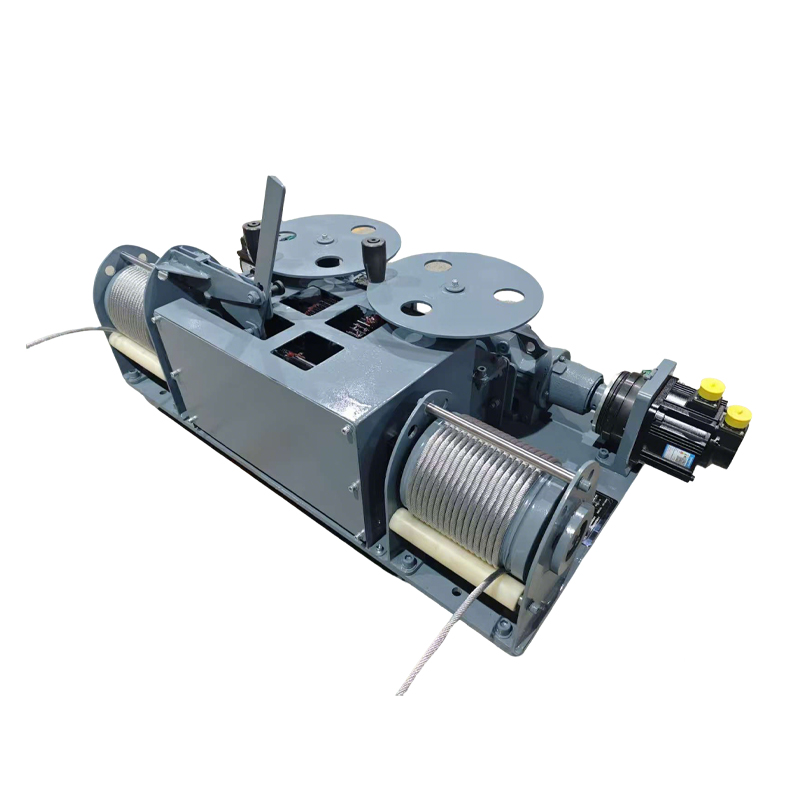
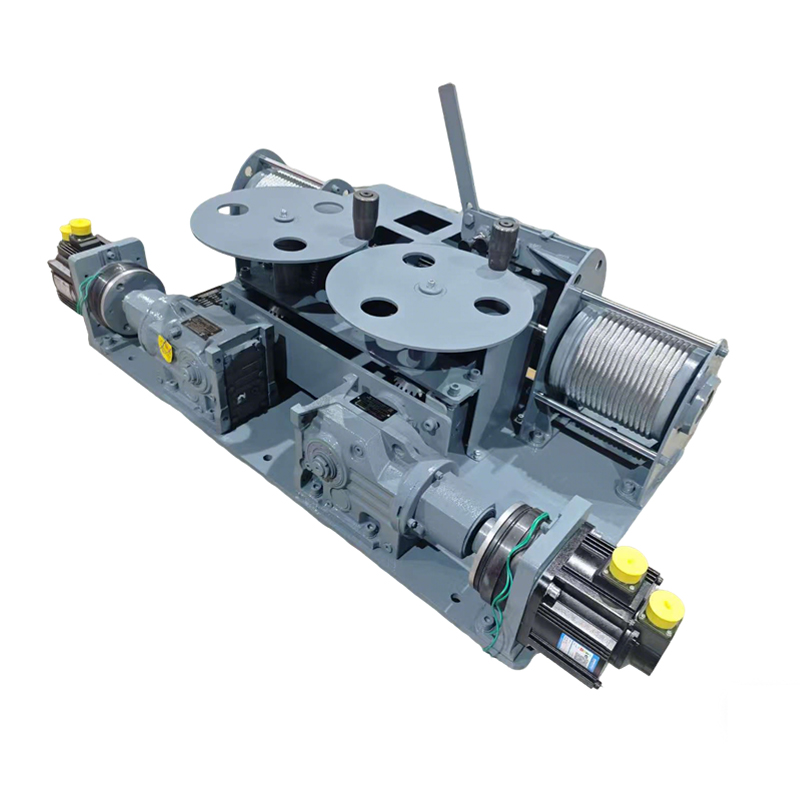
A dual-drum teaching and research platform that combines programmable servo motion with a separate hand-crank operating mode. It supports demonstrations of drive control, rope handling, transmission behavior and multi-drum operation in one configurable machine.
One Platform for Motion Control and Mechanical Demonstration
This winch is intended for laboratories, research rigs and specialized training equipment where users need to observe both powered and manual drive behavior. In electric mode, the servo motor and PLC can control speed, direction, travel and programmed sequences. After the electric drive is safely isolated, a clutch arrangement allows the mechanism to be operated by hand for setup, demonstration or controlled adjustment.
Programmable Servo Motion
Develop demonstrations around speed profiles, position commands and automated sequences.
Isolated Manual Mode
A clutch-selected hand-crank mode supports manual adjustment after powered operation is disabled.
Flexible Dual Drums
The two drums can be configured for independent or coordinated operating demonstrations.
Adaptable Lab Interface
Controls, labels, mounting points and I/O can be tailored to the teaching bench or test system.
What the System Can Demonstrate
Motion
Servo Speed and Position Control
Create exercises involving adjustable speed, acceleration, direction, travel and target positioning.
Logic
PLC Sequence Development
Integrate switches, limits, interlocks and programmed operating steps into laboratory exercises.
Mechanics
Worm-Gear Transmission
Observe high reduction ratios and resistance to back-driving under defined test conditions.
Mode Selection
Powered and Manual Operation
Demonstrate how the drive is isolated and the mechanism is transferred to hand-crank control.
Rope Handling
Grooved Dual-Drum Winding
Study rope path, drum geometry and independent or combined drum configurations.
Protection
Travel-Limit Integration
Use adjustable limit devices as part of the control and safety-interlock architecture.
Configurable Product Range
| Design Item | Available Configuration |
|---|---|
| Nominal Capacity | 250 to 8,000 kg; final rating depends on the project |
| Electrical Supply | 220–380 V AC with single-phase or three-phase versions |
| Powered Drive | Servo motor with programmable control |
| Manual Mode Selection | Electromagnetic clutch arrangement for transfer to hand-crank operation |
| Drum Arrangement | Dual grooved drums with configurable independent or combined operation |
| Transmission | Worm-gear reduction drive |
| Travel Limiting | Four-point adjustable height-limit arrangement |
| Control Interfaces | Pendant station, remote commands or PLC integration |
| Base Enclosure Protection | IP55; higher environmental protection available by request |
| Project Variables | Speed, rope length and diameter, drum logic, controls, labels and mounting geometry |
This range includes different engineered versions. Capacity, holding method, duty cycle, drum coordination and permitted operating modes must be confirmed for the individual application.
300 kg Reference Unit
The data below describes one example configuration and does not define the ratings of every model in the range.
| Rated Capacity | Wire Rope Diameter | Motor Power | Nominal Rope Speed |
|---|---|---|---|
| 300 kg | 8 mm | 0.75 kW | 3.8 m/min |
| Model | Length (A) | Width (B) | Height (C) |
|---|---|---|---|
| 300KG | 1,240 mm | 538 mm | 345 mm |
Reference Dimensions
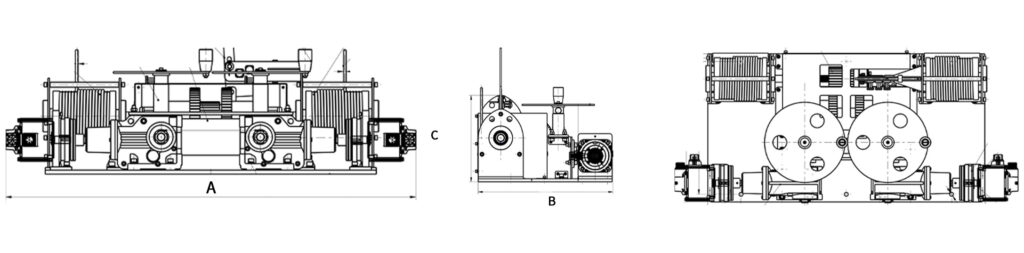
Drawing applies to the reference model. Final dimensions may change with capacity, drum size, rope storage and mounting requirements.
Manual / Electric Mode-Change Concept
Manual operation is a separate machine state—not a simultaneous backup drive. The final control system should prevent the servo motor and hand crank from driving the mechanism at the same time.
Safety note: Worm gearing can resist back-driving, but it must not automatically be treated as a certified load-holding brake. Suspended-load applications require an engineered braking and safety system appropriate to the risk assessment and applicable regulations.
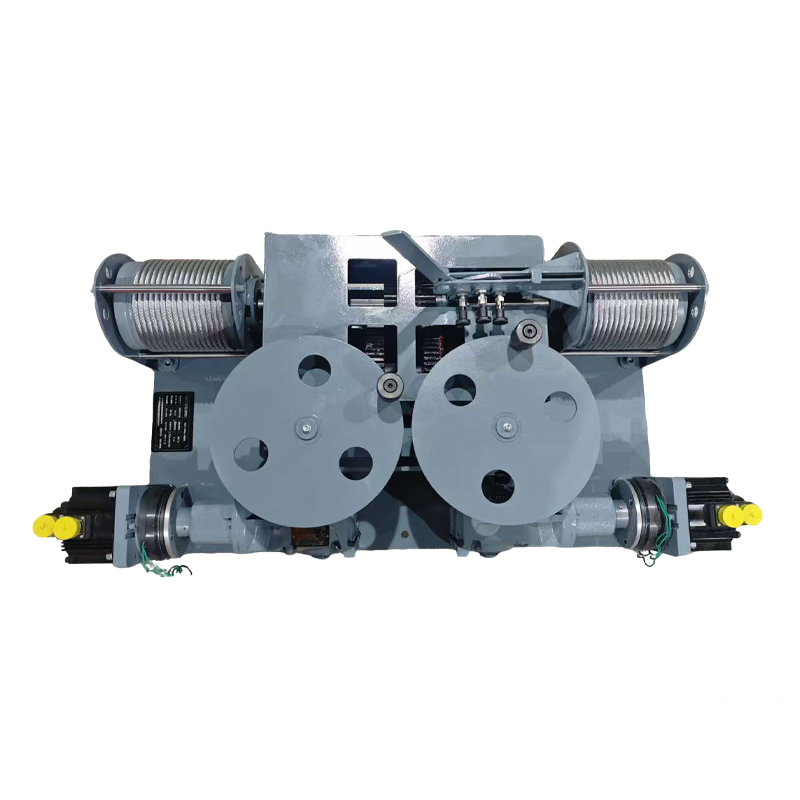
Suitable Teaching and Research Environments
University Engineering Labs
Support practical lessons in mechanical transmission, automation, controls and material handling.
Technical Training Centers
Demonstrate electric drive control, manual operation, interlocks and safe mode selection.
Research Test Rigs
Provide controlled lifting or traction for experimental assemblies and instrumentation platforms.
Science and Technology Exhibits
Present visible examples of servo motion, mechanical reduction and dual-drum operation.
Custom Educational Machines
Integrate the winch into a purpose-built bench with teaching labels, sensors and simplified controls.
Light Industrial Test Stations
Perform controlled positioning or traction tasks on non-production experimental equipment.
Recommended Laboratory Safety Package
Student-facing equipment should be delivered as a complete guarded training system. Available safety features can be selected around the curriculum, user group and risk assessment.
Configured Around the Curriculum
The machine can be adapted for basic demonstrations or more advanced automation coursework.
Simplified operator screens, instructor mode, preset exercises and accessible PLC I/O.
English component labels, rope-path markings and step-by-step mode instructions.
Custom mounting points, compact dimensions and interfaces for sensors or data acquisition.
Independent, coordinated or curriculum-specific drum operating sequences.
Rope material, diameter, travel, drum grooves and rope storage matched to the experiment.
Motor sizing, site voltage, control voltage and electrical architecture adapted to the laboratory.
Information Needed for a Laboratory Proposal
Laboratory Project FAQ
Can students program the PLC?
Yes. The control system can be configured for instructor-approved exercises, from preset operating sequences to more advanced PLC programming and I/O integration.
Can manual and electric operation be used at the same time?
No. They should be treated as separate, interlocked operating states. Powered motion must be stopped and isolated before the system is transferred to hand-crank mode.
Does the worm gearbox replace a brake?
Not automatically. Back-driving behavior depends on geometry, efficiency, lubrication, wear and vibration. If the machine handles a suspended load, an independently engineered holding and braking arrangement should be specified.
Can the two drums run separately?
Independent or coordinated operation can be configured. The required sequence and whether true synchronization is needed must be defined during control-system design.
Can the machine be supplied with English teaching labels?
Yes. Component identification, operating steps, rope direction and safety labels can be designed around the course content and local requirements.
Custom Laboratory Systems
Turn Your Training Objective into a Practical Machine
Send LYFOOCRANE your curriculum goals, load, travel, control platform, available space and safety requirements. We will prepare a manual-and-electric servo winch configuration for your teaching or research project.
Images and example specifications are provided for preliminary reference. Final capacity, dimensions, controls and safety provisions are subject to project engineering and risk assessment.